

The Insaf Female Education Card 2025 is a pioneering initiative designed to support young girls in Punjab, ensuring that financial challenges do not hinder their educational journey. Many families struggle to keep daughters enrolled in schools or colleges due to rising costs and household responsibilities.
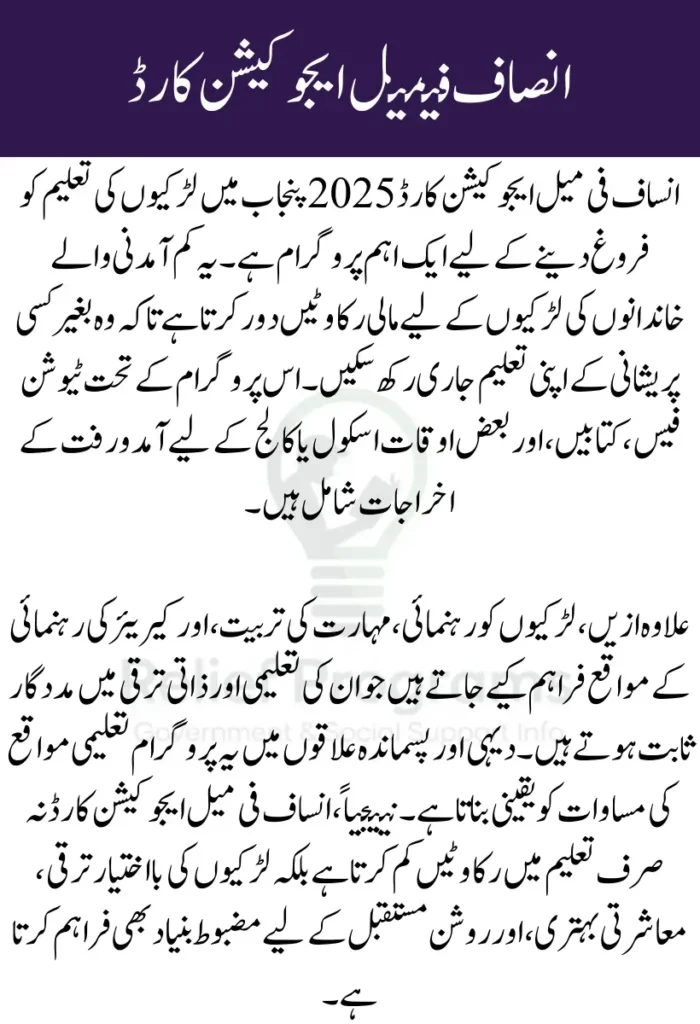
This program provides direct support to female students, highlighting the importance of education as a foundation for societal growth and community development. By removing barriers, it encourages families to invest in their daughters’ future and empowers girls to achieve academic and personal success.
For More Information: Punjab Extends STI Teacher Application Deadline
Insaf Female Education Card
The initiative primarily targets girls from underprivileged families, particularly in rural and semi-urban areas. Applicants must meet age, income, and educational criteria set by the authorities. The enrollment process has been made accessible through online platforms and local education offices, even for remote regions. Applications are carefully verified to ensure that support reaches those most in need, maintaining fairness and transparency.
Program Overview
| Feature | Details |
| Target Audience | Girls from low-income families in Punjab |
| Coverage | Tuition, books, transportation |
| Application Method | Online portal or local education offices |
| Eligibility Criteria | Age, family income, current enrollment |
| Additional Support | Mentorship, skill-building workshops, career guidance |
| Focus Areas | Rural and underserved regions |
| Expected Outcomes | Academic empowerment, social equality, community growth |
Financial Assistance for Students
The program covers tuition fees, study materials, and, in some cases, transportation costs, reducing the economic burden on families. By easing these financial pressures, it encourages girls to remain in school and continue their education without interruption. Families can focus on their daughters’ academic growth instead of worrying about the costs of schooling.
For More Information: BISP 8171 Payment Collection via Easypaisa
Support in Rural and Remote Areas
Girls living in rural or underserved areas often face additional obstacles, such as limited schools and educational resources. The initiative bridges this gap, providing opportunities for quality education regardless of location. This ensures that young girls in every part of Punjab have equal access to learning and future prospects.
Academic Growth and Skill Development
Beyond financial aid, the program emphasizes overall development. Girls often participate in mentorship programs, workshops, and career guidance sessions. These opportunities build confidence, leadership skills, and practical knowledge, preparing students for academic excellence and professional achievements.
For More Information: CM Punjab Maryam Nawaz Launches Paid Internship
Benefits for Families
Families supporting their daughters through this initiative experience tangible advantages:
- Reduced financial stress due to government assistance
- Access to educational resources and guidance programs
- Greater opportunities for daughters to pursue higher education and meaningful careers
Long-Term Impact on Communities
Investing in girls’ education produces far-reaching societal benefits. Educated women contribute to economic growth, social stability, and innovation, while communities benefit from improved gender equality and skilled workforce development. Programs like this create a ripple effect that strengthens families and society as a whole.
Conclusion
The Insaf Female Education Card is more than just a financial aid program—it represents empowerment, equality, and opportunity. By supporting girls’ education in Punjab, it ensures that talent and potential are nurtured rather than wasted due to economic or societal barriers. Such initiatives are crucial for building an educated, confident, and progressive generation that can contribute meaningfully to the nation.